In July of 1992, I was five months away from being 16 years old and Star Trek: The Next Generation was on hiatus before its sixth year. I long had been demonstrating my interests in film and television, in writing and art. My father, the clever and encouraging man he was, always found ways to show me where all these things intersected. We watched a documentary that showed the storyboarding process. “You see, it’s like the comic books you like!” he exclaimed. Which was encouraging, yes, and came in quite handy when I did eventually go to film school. At the time, however, it planted a seed. In the way that sometimes creative seeds get planted in the minds of youth. You think you planted a daisy, but in fact it is a wild, thorny raspberry vine that takes over everything.
I had a script idea for my favorite show. What was better than a script? A storyboard! Then they would know exactly what it should look like! (Oh yes…) So my excitable little teenage creator brain got hurriedly to work on what would eventually be a 90 page comic book presentation of my Star Trek: The Next Generation script, “Fatherly Love”.
Want to see?

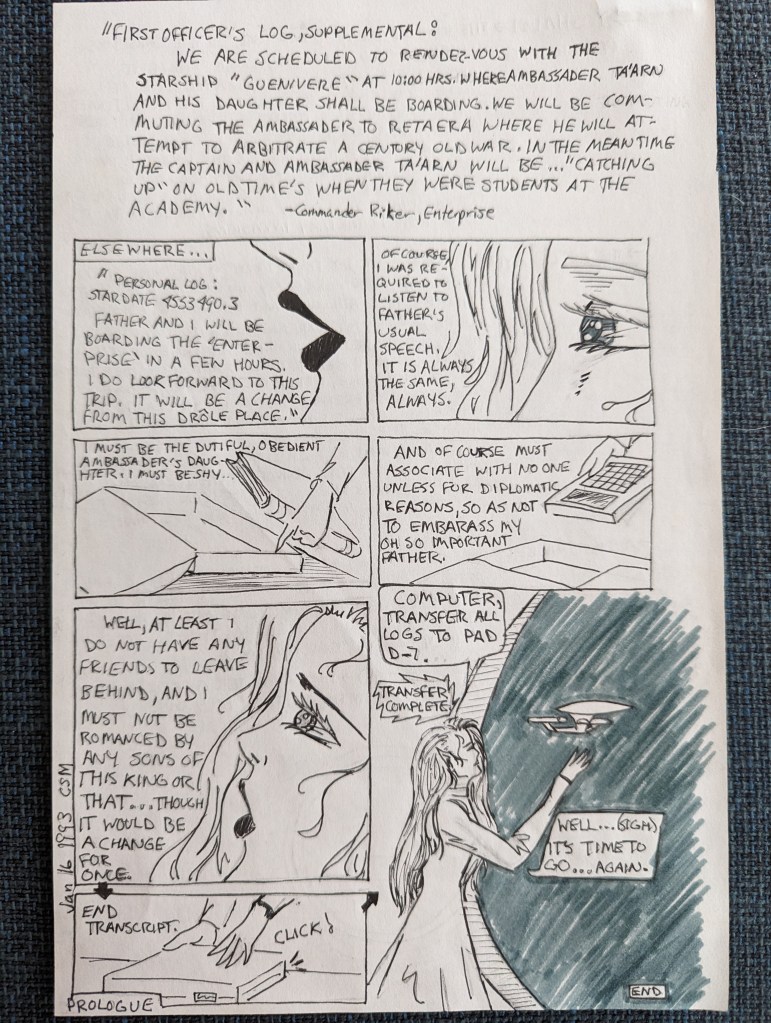
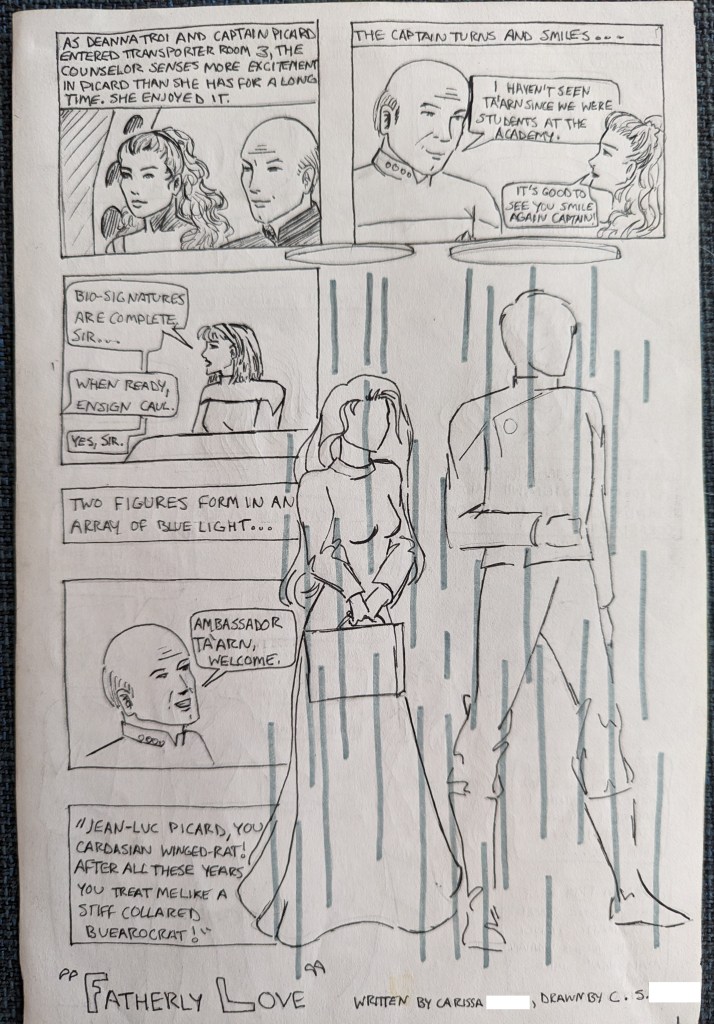
Clearly, it is genius. *ahem*
The story is hardly one to compete with anything written by even the most mediocre of writers on the show. It centers on an Ambassador and his daughter from a new race that are sort of Vulcan in appearance, but have this more Betazed empathic-telepathy and healing abilities. The Ambassador is there to mediate peace between the warring factions of another planet. Meanwhile, his daughter, Mai-Shen becomes friends with Data and Wesley. It’s pretty telegraphed in from my AMAZING 16 yr old writing skills that Mai-Shen’s father is abusive from PAGE ONE…but it takes Data, Wesley and Troi until about page 60 to figure things out. Also, this girl cries like way too much. I was clearly a very emo kid.
There is also a whole “mystery” involving the death of her mother. It was allegedly suicide, but things didn’t add up – the father killed her – what, NO?!
I, of course, must mention the obligatory teen romance. The whirlwind affair between the ambassador’s daughter and the young Wesley Crusher. Wesley really does have some very heroic moments in the story. It would have been a good episode for him. While he and Data do help her in a moment of need, he doesn’t rescue her from her father. She stands up to him herself. So at least teen me was on the right track for character development. I had my empowerment points in the right character’s stat blocks.
It all culminates in the father’s death, Data feeling emotions through Mai-Shen’s empathic abilities and as a result him volunteering to adopt her because he “misses Lal”, and a truly terrible poem that Data writes to express his friendship for Geordi and Mai. Truly awful poem. Truly. Doesn’t rhyme or have meter. It’s just bad.
There are a handful of halfway decent portraits captured in the pages. You can actually tell who they are supposed to be. So that was well done, little me. Check it out.
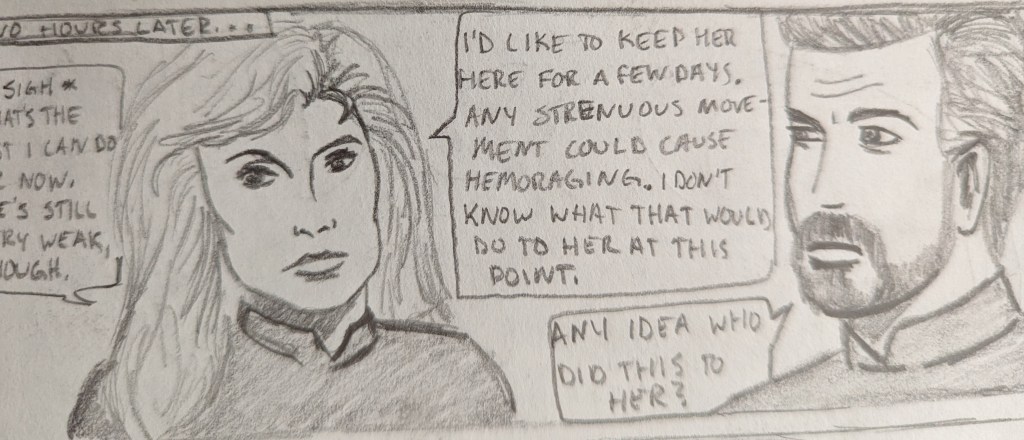
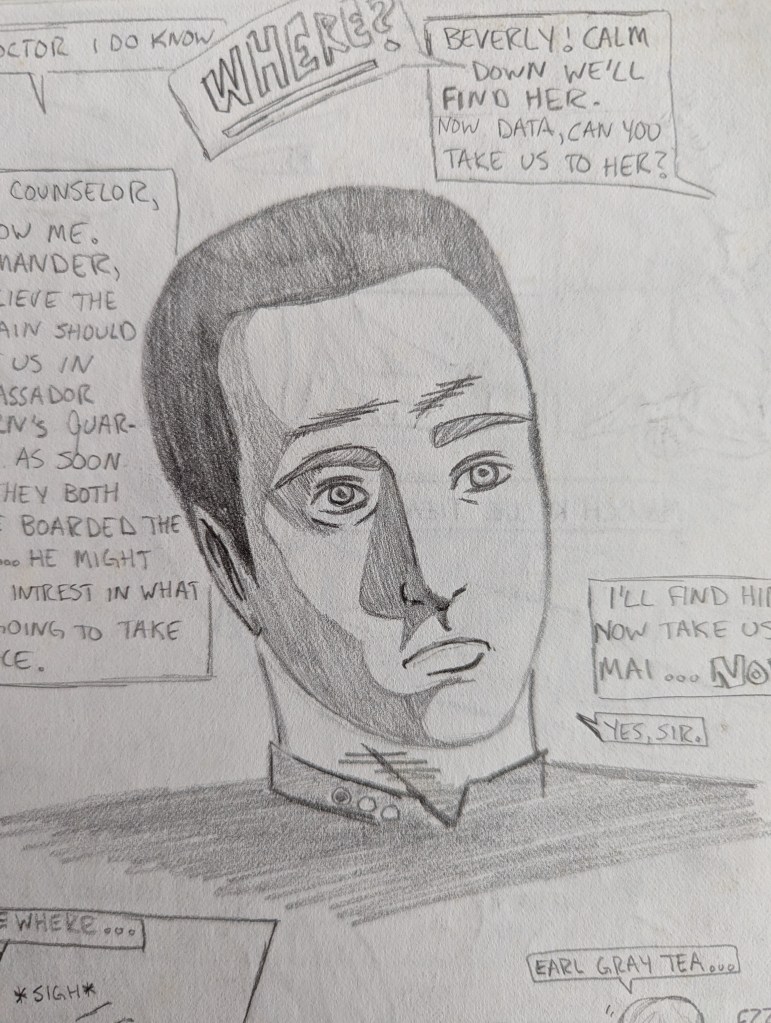

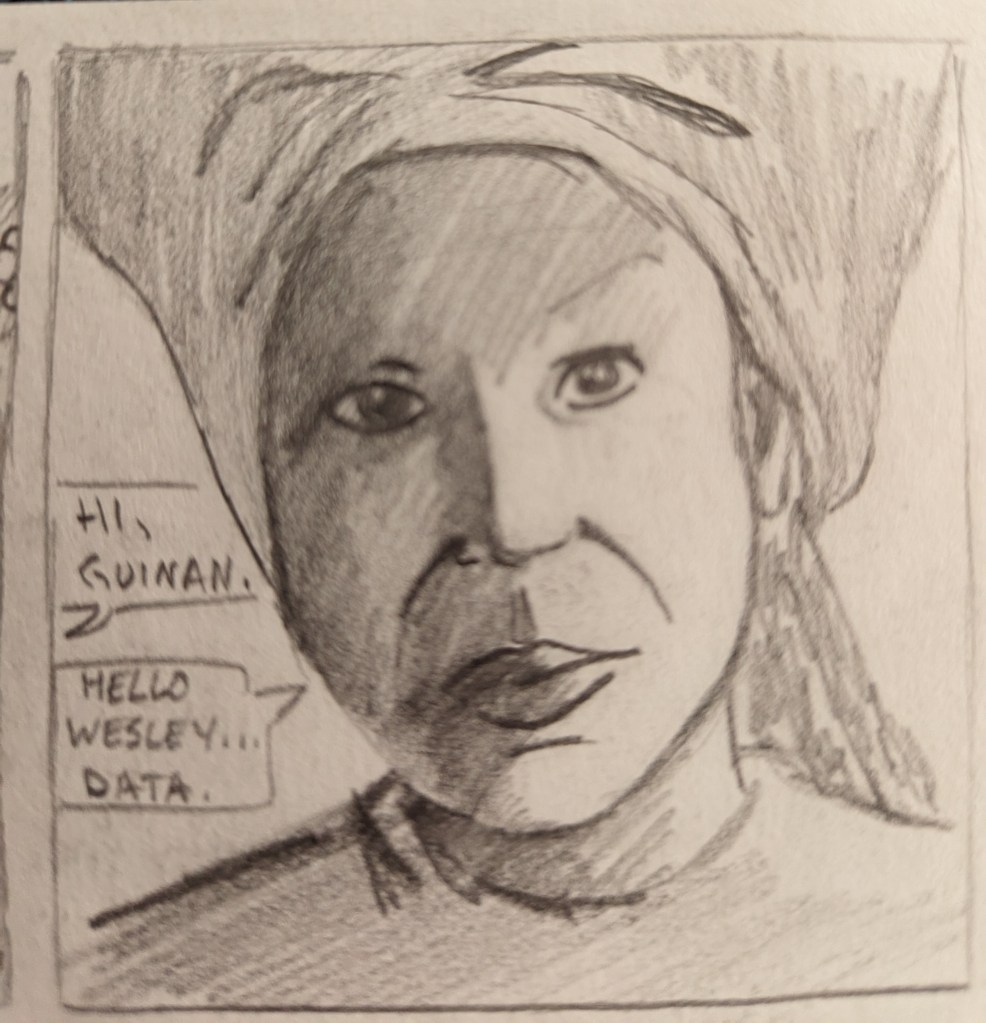
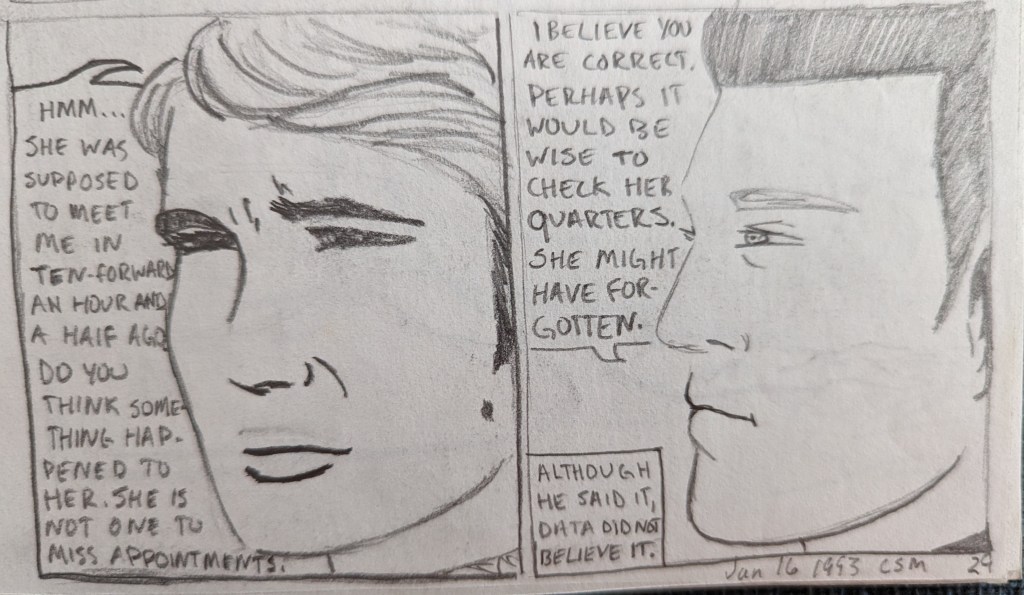
Ready for the absolutely amazing part? So my truly ambitious teenage self, at 16 yrs old, took this comic book in March of 1993, once I had finished it, and I sent it with the following letter to the studio.
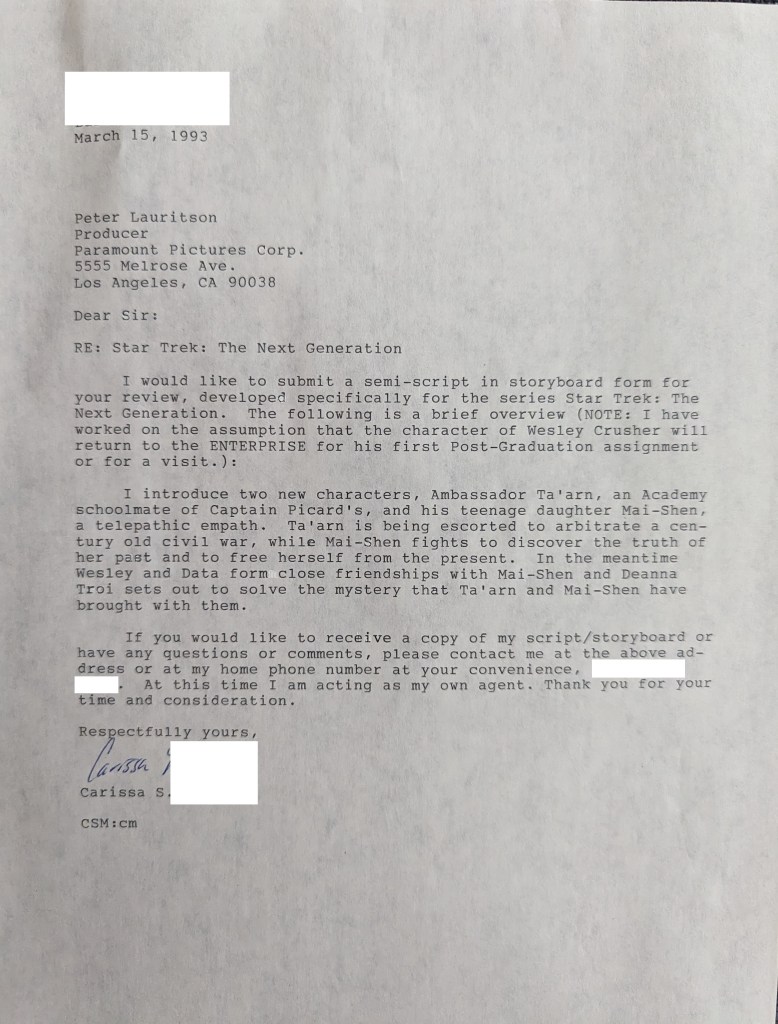
(She sounds so professional, right? Hah…what a kid.)
As an adult, I think on this scenario and my thought is, that kid is never going to see that comic book again. It’s going in the trash. Maybe it will get passed around the office for a laugh, then it will go in the trash. End of story.
Amazingly, no. They sent it back to me. The original art that I sent them – like the idiot child I was. Reading the letter that came back with it now as an adult, I recognize that it was just a form letter slapped on top of the packet and shoved in an envelope and mailed back. “All unsolicited scripts are returned unread.” I’m sure it was done for legal reasons to protect them from claims of plagiarism. At the time, as a kid, I saw this letter that came back with instructions on how to submit properly, with encouraging words on it that told me to keep trying (through proper channels and by the guidelines), it meant in my head that I should do just that. Keep trying. Keep writing. Learn the right way to do things. i.e. don’t make comic books to submit a script.
I wish I could say, 30 years later that I have some grand success story to end this with. That Jon Favreau and Dave Filoni were going to be making my Star Wars pilot into a show or something…but I don’t. I submitted to Sundance when I was 19. Trust me, even I know that script was terrible. I went to film school when I was 23. Life took some hard turns on me during and after that. But I am still writing. I keep trying. And I keep working to do it the right way, but also a little bit still my way. I look to see what is expected of me and I mostly do that, but I also try to be me, which sometimes means bucking expectations. No great moral here, just a story about a girl who charged after her dreams, even if she didn’t know she wasn’t doing it “the right way.” Let’s all do more of that.
 Carissa Starr